Commercial Waste Removal Brompton: Recycling and Sustainability
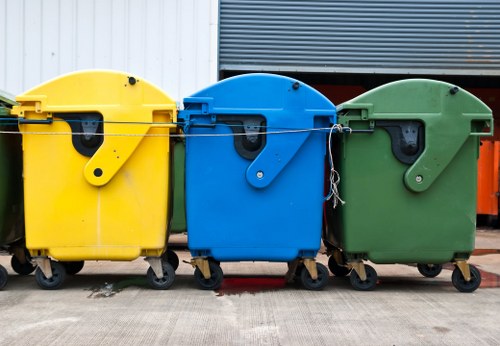 Commercial Waste Removal Brompton is committed to making the borough's commercial waste streams part of a resilient, low-impact circular economy. Our approach to eco-friendly waste disposal area management combines practical on-site segregation with transport and processing choices that reduce carbon emissions and keep useful materials in circulation. By prioritising reuse, careful sorting and certified recycling pathways, our Brompton commercial waste removal services support local businesses in meeting both regulatory and environmental goals.
We work to create a cleaner, greener Brompton through sustainable rubbish area design and ongoing operational improvements. This includes establishing dedicated sorting zones for cardboard, mixed recycling, glass and food organics at sites where clients wish to separate waste at the source. The local borough's approach to waste separation — encouraging clear streams for paper, glass, plastics and food — aligns with our systems and helps us deliver higher recycling yield for businesses across the area.
 Recycling percentage target: our objective is to reach a 70% recycling rate for all commercial waste collected in Brompton by 2028, with interim milestones of 55% by 2025. These targets cover diversion from landfill and incineration, and include measures for materials recovery such as metals, timber, hard plastics and organics. We publish aggregate performance summaries and refine collection methods to improve capture rates for high-value recyclables.
Local transfer stations are pivotal to achieving our sustainability goals. We route commercial loads through vetted transfer facilities that prioritise material separation, quality sorting and onward delivery to licensed processors. These transfer hubs allow faster turnaround, reduce double-handling and strengthen traceability for streams destined for recycling, energy recovery or reuse. Using nearby transfer points minimises vehicle miles travelled — a core strategy for low-impact commercial waste removal in Brompton.
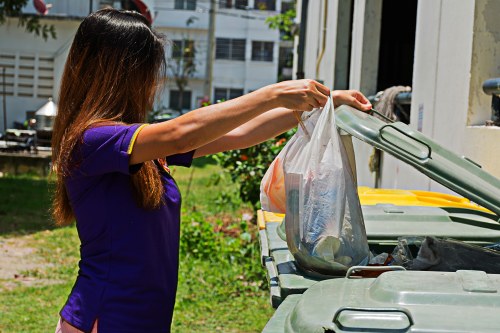 Partnerships with charities and social enterprises form a central part of our reuse strategy. Items that are still usable — furniture, office equipment, textiles and working electronics — are inspected and redirected to local charity partners and community projects. Our relationships include furniture reuse groups, electronics refurbishment schemes and local employment-focused social enterprises that benefit from material donations. These collaborations reduce waste, extend product life cycles and support the Brompton community.
Common recycling activities we enable across the borough include:
- Paper and cardboard collection for businesses and retail premises;
- Glass and metal capture from kitchens and customer-facing outlets;
- Plastic sorting focused on hard plastics and mixed rigid packaging;
- Food waste diversion into anaerobic digestion or composting where available;
- Bulky and construction waste management with selective material recovery.
To lower emissions across our vehicle fleet we have invested in low-carbon vans and electric vehicles tailored for urban commercial rounds. Route optimisation software, consolidated collection schedules and compact electric vans designed for Brompton's street patterns allow us to reduce fuel use, noise and local air pollution. We aim for at least 50% of collection miles to be on electric or hybrid vehicles by 2027, further improving the sustainability credentials of Brompton commercial waste services.
Our operational standards include careful documentation of waste transfers, certified processing partners and strict sorting protocols that reflect both local authority guidance and best practice for sustainable rubbish areas. Regular site audits and staff training ensure that waste is classified correctly and that recyclable streams are kept uncontaminated. By doing so, we increase the proportion of material that can be recycled rather than sent for disposal.
 We measure progress through a set of environmental KPIs: recycling percentage, diversion from landfill, average transport emissions per tonne and reuse volume directed to charities. These metrics are used to refine collection patterns, collaborate with transfer station operators and prioritise investments in low-emission vehicles and reusable container systems. Transparent tracking helps business customers understand how their waste contributes to borough-wide sustainability targets.
 Engagement with local stakeholders is essential. We run partnership programmes with property managers, markets and local businesses to design compliant, efficient and aesthetically integrated sustainable rubbish areas suitable for Brompton's mixed commercial streets. Training, clear signage and container standardisation reduce contamination and support better recycling outcomes across the borough.