Health & Safety Policy — Commercial Waste Removal Brompton
Purpose: This policy sets out the approach of our commercial waste operation to managing health and safety for all activities related to Commercial Waste Removal Brompton and associated commercial rubbish services. It applies to all staff, contractors and site visitors engaged in commercial waste clearance and rubbish collection activities. The aim is to prevent harm, reduce exposure to hazardous materials, and ensure legal compliance across our service area while maintaining robust operational standards.Scope and Commitment
We are committed to delivering safe, responsible commercial rubbish removal and waste handling. This policy covers waste collection, loading, transport, temporary storage and disposal from commercial premises. The organisation will ensure resources are allocated to health and safety, continuous improvement is promoted, and that all operations meet or exceed relevant statutory requirements. Every employee must understand their role in implementing these measures.
Responsibilities and Accountability
Management retains ultimate responsibility for safety systems, while supervisors are responsible for day-to-day compliance. Employees and contractors must follow safe work instructions and report hazards. A named safety coordinator will oversee risk assessments, training schedules and audits. The policy requires clear delegation so that those performing waste removal Brompton tasks are empowered to stop unsafe work and seek support without delay.Risk Assessment and Safe Systems
Risk assessments will be carried out for all routine and non-routine tasks involving commercial waste collection and transfer. Controls will be implemented following the hierarchy of risk management: elimination, substitution, engineering controls, administrative controls and use of personal protective equipment (PPE). For vehicle operations, loading plans, segregation protocols and vehicle maintenance schedules are included in safe systems of work.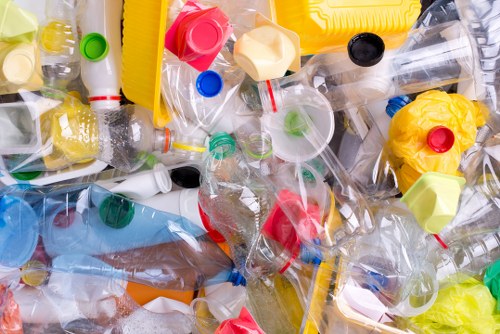
Training, Competency and Equipment
Training is mandatory for staff involved in commercial waste clearance operations. Competency records will be maintained and refreshed periodically. All operatives will be trained in safe lifting techniques, manual handling, correct use of equipment and emergency procedures. Vehicles and handling equipment will be inspected regularly and any defects reported via the internal maintenance process. Only certified machinery and well-maintained vehicles will be used.Waste segregation and handling procedures require strict adherence to prevent contamination and accidental exposure. Hazardous wastes are identified, contained and transported according to statutory controls. The following controls are standard practice:
- Segregation of recyclable, non-recyclable and hazardous streams at source where possible;
- Use of secure containers and labels for hazardous materials and chemical wastes;
- Safe transfer protocols to prevent spills, with spill kits and containment measures available on site and on vehicles.
Personal Protective Equipment and Hygiene
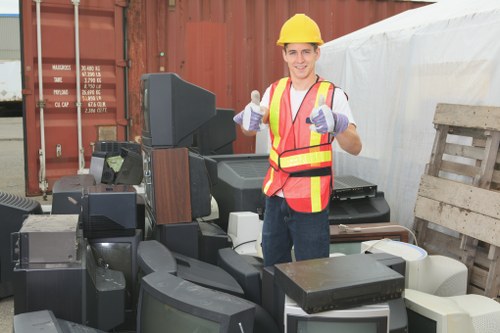
Provision of appropriate PPE is mandatory. Items may include high-visibility clothing, gloves, safety boots, eye protection and respiratory protection when required. Staff must maintain personal hygiene, with handwashing facilities and decontamination provisions after handling waste. Training on correct PPE selection, fitting and maintenance forms part of initial induction and refresher training for all rubbish collection operatives.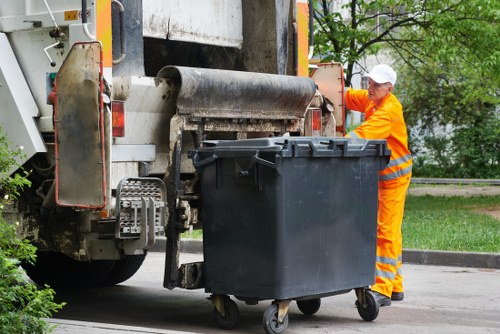
Monitoring, Reporting and Incident Management
We maintain a robust regime of monitoring and auditing to ensure compliance. Incidents, near-misses and injuries must be reported immediately through the company reporting system. Investigation protocols will identify root causes and corrective actions will be implemented to prevent recurrence. Records of investigations, remedial actions and safety performance metrics will be retained and reviewed as part of the management review process for continuous improvement.
Emergency Response and Business Continuity
Emergency procedures are in place to respond to incidents such as spills, vehicle collisions or sudden hazardous exposures during commercial waste collection operations. Staff will be trained in first aid, spill containment and safe evacuation. Clear communication channels and contingency plans support operational resilience so that essential commercial waste clearance Brompton services can be resumed safely and promptly after an incident.Contractors and Third Parties
Where third-party contractors are engaged, they must comply with this policy and demonstrate equivalent standards of safety and competence. Pre-qualification checks, permits to work, and supervision arrangements will be used to manage risks associated with subcontracted activities. Any subcontractor providing rubbish collection services or specialised waste transport must hold current certifications and insurance appropriate to the task.Performance, Review and Legal Compliance
The company will monitor legislative changes and industry best practice and will update this policy accordingly. Regular internal and external audits will assess the effectiveness of controls for commercial waste removal and rubbish handling. Performance indicators include incident frequency, audit findings, training completion rates and corrective action closure. The policy will be reviewed at least annually or following significant changes to operations.Conclusion: This health and safety policy underpins safe, reliable and legally compliant waste services. Everyone involved in commercial waste collection and waste removal activities must contribute to a safe working environment by following procedures, participating in training and reporting hazards. Through shared responsibility and active management, the organisation seeks to protect people, property and the environment while delivering professional commercial waste and rubbish removal services.