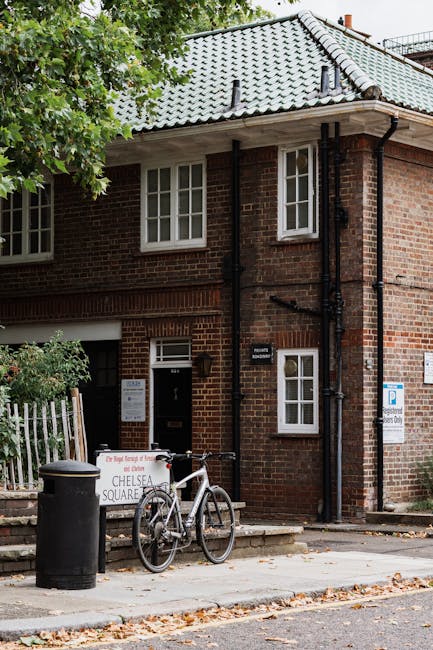
Chelsea Barracks Estate RBKC waste rules and rubbish collection: a practical guide for residents, contractors, and property managers
If you live, work, or manage a property near Chelsea Barracks Estate, rubbish can become awkward fast. One minute it is a bin bag or two, the next it is packaging, furniture, builder's rubble, or a forgotten appliance sitting in the wrong place. Chelsea Barracks Estate RBKC waste rules and rubbish collection are there to keep that under control, but the reality is a bit more nuanced than just "put it out on the right day".
This guide explains how waste handling usually works around the estate, why the rules matter, what people often get wrong, and how to stay tidy without causing hassle for neighbours, staff, or building management. It is written for real life, not theory. Because let's face it, rubbish never arrives at a convenient moment.
Table of contents
- Why Chelsea Barracks Estate RBKC waste rules and rubbish collection Matters
- How Chelsea Barracks Estate RBKC waste rules and rubbish collection Works
- Key Benefits and Practical Advantages
- Who This Is For and When It Makes Sense
- Step-by-Step Guidance
- Expert Tips for Better Results
- Common Mistakes to Avoid
- Tools, Resources and Recommendations
- Law, Compliance, Standards, or Best Practice
- Options, Methods, or Comparison Table
- Case Study or Real-World Example
- Practical Checklist
- Conclusion
- Frequently Asked Questions
Why Chelsea Barracks Estate RBKC waste rules and rubbish collection Matters
Waste rules are not just about tidiness. On an estate like Chelsea Barracks, they help protect access, safety, appearance, and day-to-day living standards. In a high-value, high-footfall part of London, a single pile of rubbish can create a bigger problem than people expect: blocked walkways, unpleasant odours, missed collections, complaints from neighbours, and extra pressure on building teams.
RBKC waste expectations also matter because rubbish left in the wrong place tends to attract more rubbish. One bag becomes three. A broken chair gets parked next to a bin store. Cardboard starts to spread after a damp morning. You know the scene. It looks small until it is not.
For residents and contractors, understanding the system saves time and frustration. For property managers and concierge teams, it helps keep the estate running smoothly. And for anyone arranging a clearance, it reduces the risk of rejected items, avoidable delays, or charges caused by poor sorting.
Expert summary: The best waste strategy around Chelsea Barracks is simple: sort early, store neatly, keep prohibited items separate, and match the disposal method to the type of waste. That one habit prevents most problems.
If you need a broader service for mixed household or business waste, a general waste removal option is often easier than trying to manage several separate trips yourself. For bigger property projects, it can also help to look at builders waste clearance or office clearance where relevant.
How Chelsea Barracks Estate RBKC waste rules and rubbish collection Works
While exact estate instructions can vary by building, block, or management agreement, the day-to-day logic is usually straightforward. Waste is expected to be separated, contained, and presented in a way that allows safe collection. That means the right items in the right place, at the right time, without spilling into shared areas.
Most people encounter waste handling in one of three ways:
- Scheduled bin collection for regular domestic waste, recycling, and food waste where applicable.
- Estate-managed collection points such as bin rooms, refuse stores, or designated holding areas.
- Ad hoc clearance for bulky items, leftover materials, end-of-tenancy waste, or renovation debris.
Collection teams and building staff generally need clear access. That sounds obvious, but it is often the detail that goes wrong. A bin tucked behind a door, overfilled sacks, or a sofa placed "just for a moment" in the lobby can disrupt the whole process. On a busy day, even a small obstruction can create a domino effect.
For bulky household items, a more suitable route may be a specialist service such as flat clearance, furniture clearance, or mattress and sofa disposal. These services are often more practical than trying to squeeze large items into standard waste channels.
For mixed household items during a move, downsizing, or refurbishment, home clearance and house clearance are often the cleanest options. They suit moments when you need everything handled in one go, rather than piecemeal.
Key Benefits and Practical Advantages
Good waste handling around Chelsea Barracks is not just a compliance exercise. Done well, it creates visible day-to-day advantages. The estate feels calmer. Shared spaces stay cleaner. Staff spend less time chasing avoidable issues. And residents get less of that frustrating "who left this here?" feeling.
- Cleaner communal areas with less overflow around bin stores and access routes.
- Fewer missed collections because waste is prepared in the right form.
- Better neighbour relations since shared spaces stay usable and pleasant.
- Improved safety by reducing trip hazards, sharp edges, and blocked exits.
- Less time spent on admin for managers, concierges, and contractors.
- More efficient clearances when items are already grouped and ready to go.
There is also a quieter benefit that people underestimate: peace of mind. If rubbish is under control, everything else feels easier. A move-out, a refurbishment, or even a simple flat reset becomes far less stressful.
And if you are clearing old furniture, the difference between an organised pick-up and an improvised one can be dramatic. A dedicated furniture disposal service helps ensure items are taken away properly rather than left waiting in a hallway like an unwelcome guest.
Who This Is For and When It Makes Sense
This topic is relevant to more people than you might first think. It is not only for estate managers or contractors. In practice, it matters to anyone whose rubbish needs to move through a managed residential setting.
Typical users include:
- Residents in apartments or townhouses near Chelsea Barracks
- Landlords handling tenant changeovers
- Letting agents arranging pre-let or post-tenancy clear-outs
- Building managers and concierge teams
- Refurbishment contractors and decorators
- Office occupiers with local business waste needs
It makes sense to think about the rules before waste becomes visible, not after. If you are replacing furniture, doing a spring clear-out, or coordinating trades, waste planning should sit right alongside keys, access, and timing. Otherwise it becomes the bit everyone scrambles to fix at the last minute. That is never fun.
For business premises or mixed-use situations, business waste removal may be the most sensible route. If the work is office-based and there are confidential papers or bulk office items involved, it may also help to consider confidential shredding and office clearance together.
For outdoor-related debris, such as soil, cuttings, or landscaping leftovers, garden clearance is often the better fit. Different waste, different handling. Simple, but easy to ignore when you are in a hurry.
Step-by-Step Guidance
If you want to keep things smooth, use a clear process. A bit of planning here saves an awful lot of back-and-forth later.
- Identify the waste type. Separate household rubbish, recycling, bulky items, builders' debris, electricals, and anything potentially hazardous.
- Check the estate arrangement. Confirm where items can be stored, when collections happen, and whether management approval is needed for larger deposits.
- Sort and contain everything. Use sturdy sacks, boxes, or lidded containers so waste does not spill into common areas.
- Remove prohibited materials from general waste. Batteries, chemicals, paint, pressurised containers, and some appliances usually need special handling.
- Prepare bulky items separately. Sofas, mattresses, broken wardrobes, fridges, and white goods need more care than a standard bin run.
- Book the right service. Match the collection method to the waste stream. Avoid sending everything the same way just because it is convenient.
- Time the collection carefully. Aim for a window that does not interfere with peak foot traffic or other estate logistics.
- Keep access clear. Make sure lifts, corridors, loading areas, and bin rooms are not blocked.
If you are clearing a flat, a flat clearance service can be a neat one-stop answer. For bigger, mixed possessions or end-of-tenancy clearances, home clearance often makes the job feel less chaotic.
One small but helpful habit: take a photo of the waste layout before collection if several people are involved. It sounds a bit over-cautious, maybe, but it can prevent confusion when different contractors are using the same space.
Expert Tips for Better Results
Here is the part that saves people time in the real world. Not the ideal world. The real one, where the lift is busy and nobody quite remembers where the extra bin bags were left.
- Label special piles early. If one pile is recycling, one is general waste, and one is bulky, mark them clearly before anyone gets creative.
- Keep cardboard dry. Wet cardboard gets heavy, messy, and much harder to handle.
- Don't mix sharp waste with loose sacks. Broken glass and metal edges deserve their own packaging.
- Move waste as close to collection time as possible. The longer it sits, the more likely it is to be moved by someone else.
- Use the right service for the right item. A fridge is not a sofa, and a sofa is not builder's rubble. Obvious, yes, but it still gets mixed up.
- Coordinate with building access early. Service lifts, loading bays, and concierge handovers can make or break the job.
If you have appliances to remove, look at fridge and appliance removal. White goods are awkward enough on their own, and nobody wants a fridge balanced somewhere temporary "for now".
For homes with mixed old items, furniture disposal and mattress and sofa disposal are worth considering because they reduce the chances of items being left behind or handled inconsistently.
Truth be told, the best tip is this: do a quick last look around the room before collection day. People nearly always find one extra lamp, one hidden bag, one box of cables. Every time.
Common Mistakes to Avoid
Most waste problems are not caused by one huge failure. They are caused by a few small oversights stacking up. Here are the ones that come up again and again.
- Leaving waste in shared circulation space. Corridors, landings, and lobbies are not storage areas.
- Overfilling bags or containers. If it bulges, tears, or won't close, it is already a problem.
- Mixing hazardous and general waste. This can create serious handling issues and may breach site rules.
- Assuming bulky items are "obviously fine". They often need advance arrangement.
- Booking too late. Last-minute collections can be more expensive or simply unavailable.
- Ignoring building instructions. Estate rules exist for a reason, even if they seem a touch fussy on first read.
Another common issue is assuming that skip-style disposal will always fit the job. In some cases, a skip is useful; in others, it is the wrong tool entirely. If you are weighing that up, the page on what can go in a skip is a practical starting point.
And if the waste is more complex than expected, it is usually better to ask for advice early than to guess. Guessing tends to become expensive in rubbish work. Oddly enough.
Tools, Resources and Recommendations
You do not need a warehouse of equipment to handle rubbish well, but a few basics make a big difference.
- Heavy-duty rubble sacks for dense waste and mixed clear-out material.
- Stackable boxes or crates for books, paperwork, cables, and smaller household items.
- Labels or marker pens to keep waste streams distinct.
- Gloves and protective footwear for anyone moving items by hand.
- Tape and wrapping materials for broken items with sharp edges.
- A collection timetable so everyone knows when items can go out.
From a service perspective, the most useful pages to review are those that match the waste you actually have. For instance, builders waste clearance for renovation debris, garage clearance for stored clutter, and loft clearance for long-forgotten household items.
If you care about waste handling quality and responsible disposal, it is worth looking at recycling and sustainability. That is where a lot of people realise that what looks like "junk" can often be separated more intelligently.
One practical recommendation: keep a single "uncertain items" box. Put awkward things in there-chargers, odd fittings, old paperwork, spare fixtures-and review it before collection day. It avoids frantic decisions later.
Law, Compliance, Standards, or Best Practice
Without pretending to be the estate manager, the key point is this: waste handling in the UK is expected to be responsible, safe, and properly separated where needed. Residents and contractors should follow site instructions, avoid fly-tipping, and make sure waste is not left in a way that creates hazards or nuisance.
For commercial or contractor waste, duty of care principles are especially important. In plain English, that means you should know what you are handing over, who is taking it, and whether the materials need special treatment. If something is hazardous, electrical, or contains regulated components, it should not simply be mixed into ordinary rubbish.
There is also a practical standard of behaviour that matters just as much as formal rules: do not block access, do not contaminate recycling, and do not assume someone else will tidy up after you. In a shared estate, that kind of shortcut spreads fast.
Where relevant, a provider should also operate with visible safety procedures, insurance awareness, and consistent handling practices. Pages such as health and safety policy and insurance and safety are useful because they signal that waste is being handled with care rather than as an afterthought.
For sensitive paperwork or records, the proper route is not a general bin. It is safer to use a controlled destruction process, such as confidential shredding, especially in offices, managing agents, or mixed-use settings.
One more sensible note: if there is any doubt about a material, treat it as a special item until you have checked. That habit prevents a lot of avoidable trouble.
Options, Methods, or Comparison Table
Different rubbish types need different approaches. The "best" option depends on access, urgency, item type, and how much sorting you want to do yourself.
| Method | Best for | Strengths | Watch-outs |
|---|---|---|---|
| Standard bin collection | Everyday household waste and recycling | Simple, routine, familiar | Not suitable for bulky or special items |
| Estate-managed bin store | Shared residential waste | Centralised and tidy when managed well | Can overflow quickly if residents are careless |
| Flat or home clearance | Mixed household items, end-of-tenancy clear-outs | Convenient, time-saving, less lifting for you | Needs good access planning |
| Builders waste clearance | Renovation debris, rubble, packaging | Designed for heavier construction waste | Materials must still be sorted correctly |
| Specialist disposal | Fridges, mattresses, sofas, hazardous items | Safer handling and more appropriate routing | May need extra notice or item-specific preparation |
If you are deciding between methods, ask yourself one simple question: is this ordinary rubbish, or is it something with weight, size, or risk attached? That answer usually points to the right route pretty quickly.
Case Study or Real-World Example
A common scenario goes like this. A resident in a Chelsea Barracks apartment is preparing for a move. There are boxes of books, two armchairs, a mattress, a broken side table, and a handful of old kitchen items. At first glance, it feels manageable. Then reality arrives: the lift booking clashes with another move, the bin store is full, and the hallway starts to feel cluttered.
In that kind of situation, the smoothest approach is usually to separate the waste before collection day. Paper and cardboard go together. Furniture is grouped separately. The mattress is kept clean and accessible. Any fragile or awkward items are wrapped. If there is a fridge or appliance, that is treated as a distinct item rather than lumped in with everything else.
That one bit of discipline changes the whole experience. The collection runs faster. Less needs to be moved twice. The concierge does not have to improvise. And the resident gets to move on with the day instead of standing around in a cloud of half-packed boxes wondering why it always takes longer than expected.
For similar situations, a combined approach using flat clearance and, where needed, fridge and appliance removal is often more practical than trying to piece together separate arrangements. If the move involves a lot of furniture, adding furniture clearance can simplify things further.
The real lesson? Good waste handling is mostly about timing and sorting. The pickup itself is often the easy part.
Practical Checklist
Use this quick checklist before any collection or clearance around Chelsea Barracks Estate.
- Have you identified the waste type correctly?
- Have you separated recycling, general waste, bulky items, and special items?
- Are all bags closed securely and not overfilled?
- Have you checked the estate's access and storage instructions?
- Are lifts, corridors, and shared entrances kept clear?
- Have you removed hazardous or prohibited materials from the pile?
- Is there a suitable service booked for furniture, appliances, or builders' waste?
- Do all household or office members know what is being collected?
- Have you allowed enough time for the collection without rushing?
- Have you taken a final walk-through to catch forgotten items?
If you can tick most of those off, you are in good shape. If not, pause and tidy the process first. It is almost always worth the extra ten minutes.
Get a free quote today and see how much you can save.
Conclusion
Chelsea Barracks Estate RBKC waste rules and rubbish collection are really about making shared living and working spaces function properly. The aim is not to make rubbish complicated. It is to keep the estate safe, efficient, and pleasant to use.
Once you understand the basics-sort early, use the right collection route, protect shared spaces, and avoid mixing awkward items into standard waste-the whole process gets much easier. Whether you are a resident, landlord, contractor, or manager, the win is the same: fewer surprises, less clutter, and a cleaner environment for everyone involved.
And honestly, that is a relief. Waste will always be part of life, but it does not have to take over the day. A little order goes a long way.
If you are planning a clearance, want to compare service options, or need advice on a specific item type, start with the pages most relevant to your waste stream and build from there. That is usually the calmest route, and the most efficient one too.
A tidy estate tends to feel better in a very human way. Quiet, orderly, easier to breathe in.
Frequently Asked Questions
What are Chelsea Barracks Estate RBKC waste rules and rubbish collection meant to control?
They are meant to keep waste in the right place, at the right time, and in the right condition for collection. That protects shared areas, reduces nuisance, and helps avoid blocked access or rejected waste.
Can I leave rubbish in the corridor or lobby for collection later?
Usually no. Shared circulation spaces are not meant for storage, and even "temporary" placement can create fire, safety, or access issues. It is better to use the designated bin or collection point.
What should I do with bulky items like sofas or mattresses?
Bulky items normally need a dedicated disposal route. Pages such as mattress and sofa disposal or furniture disposal are more appropriate than standard bin arrangements.
Do I need a specialist service for renovation or builder waste?
If you have rubble, packaging, timber offcuts, plasterboard, or similar debris, yes, a service such as builders waste clearance is usually the better fit.
What happens if waste is not sorted properly?
It may be refused, delayed, or cause contamination issues. Mixed waste can also create extra work for building staff and may lead to unnecessary charges or complaints.
Can I use a skip at Chelsea Barracks Estate?
Possibly, but only if the site allows it and the waste type is suitable. It depends on access, permissions, and what you are actually throwing away. The page on what can go in a skip helps you judge whether that route makes sense.
What is the best option for a full flat clear-out?
A flat clearance service is often the simplest option, especially if there are multiple item types and limited time.
How do I handle fridges, freezers, or other appliances?
Appliances should be handled separately because they can be bulky, heavy, and sometimes contain materials that need special processing. Fridge and appliance removal is the sensible route.
Is confidential paper waste treated differently?
Yes. Sensitive paperwork should be kept out of ordinary waste and handled through a controlled process such as confidential shredding.
What if I am not sure whether an item counts as hazardous?
Do not guess. Put it aside and check before disposal. If a material might be chemical, battery-related, pressurised, oily, or otherwise risky, it needs more careful handling than normal waste.
Are there better options for business or office waste near the estate?
Yes. Business premises often do better with business waste removal, and office-specific clearances may need office clearance as well as document destruction.
How can I keep waste handling smoother during a move?
Separate items early, book access in advance, and avoid leaving things in communal spaces. A small amount of planning usually prevents the messy pile-up that everyone ends up staring at on moving day.