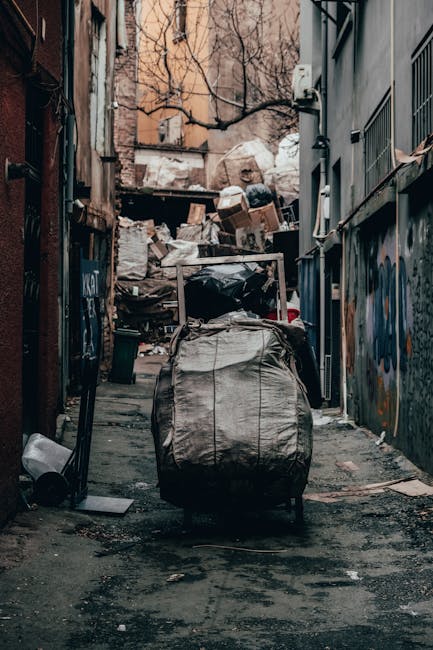
Brompton Old Brompton Road Rubbish Removal Guide

If you are trying to clear rubbish on or around Old Brompton Road, you already know the problem is rarely just "a bit of waste." It is often a mix of bulky furniture, bagged household clutter, builder's debris, awkward access, parking pressure, and the simple fact that you do not want the mess hanging around for another week. This Brompton Old Brompton Road Rubbish Removal Guide breaks the process down in plain English, so you can decide what to remove, how to do it safely, and when a professional clearance service makes the most sense.
Whether you are emptying a flat, tidying a basement, dealing with office waste, or clearing post-renovation debris, the goal is the same: get it gone properly, without stress, and without creating a second problem. Let's face it, rubbish removal in central London needs a bit of planning. This guide covers the practical steps, the common mistakes, and the local considerations that matter most.
Why Brompton Old Brompton Road Rubbish Removal Guide Matters
Old Brompton Road sits in a part of London where convenience, access, and speed all matter. Waste that would be easy enough to deal with in a suburban driveway can become a bit of a puzzle here. Tight streets, shared entrances, upper-floor flats, basement conversions, loading restrictions, and the usual city shuffle all affect how rubbish gets removed.
That is why a local-minded approach matters. It is not just about lifting items into a van. It is about timing, access, sorting, and choosing the right method for the type and volume of waste you have. A rushed decision can lead to extra costs, clutter left behind, or items being handled the wrong way.
There is also the reputational side. For landlords, letting agents, offices, and businesses, a messy clearance can affect tenants, staff, customers, and the building itself. A smooth rubbish removal plan keeps the space presentable and reduces disruption. And in a busy neighbourhood, that calm matters more than people think.
Expert summary: The best rubbish removal job is the one you barely notice happening. Clear sorting, careful lifting, proper disposal, and minimal disruption. Simple, really - though not always easy.
For bigger or more complex clearances, it can help to look at related services such as flat clearance, house clearance, or office clearance, depending on the setting. If the waste is more general mixed rubbish, waste removal is the broader option to consider.
How Brompton Old Brompton Road Rubbish Removal Guide Works
Most rubbish removal jobs follow a fairly simple pattern, even if the site itself is anything but simple.
First, you identify what needs to go. Then you separate recyclable items, reusable items, and anything that needs special handling. After that, you decide whether you are using a van-based collection, a one-off clearance, a skip, or a combination of approaches. Finally, the waste is loaded, transported, and taken to an appropriate facility for sorting and disposal.
On Old Brompton Road, the process often includes a bit more coordination than people expect. You may need to plan around neighbours, building access, stairwells, lift use, or the reality that a van cannot just stop anywhere for ages. That is normal in central London. It is also why preparation can save you a surprising amount of time.
If the rubbish includes furniture, appliances, or bulky items, it is worth checking specialist support pages such as furniture clearance, mattress and sofa disposal, or fridge and appliance removal. These tend to need more careful handling than standard bagged waste.
In practical terms, good rubbish removal is a mix of sorting, lifting, route planning, and disposal discipline. Nothing glamorous about it. But it works.
Key Benefits and Practical Advantages
A well-managed rubbish removal job gives you more than a clean floor. It gives you breathing room.
- Faster turnaround: Spaces become usable again much sooner, which matters if you are moving, letting, renovating, or reopening a business.
- Less physical strain: Heavy lifting, awkward bends, and multiple trips up and down stairs are where many DIY clearances go wrong.
- Cleaner finish: A proper removal service usually leaves the area neater and more presentable than a rushed self-clearance.
- Better sorting: Recyclable materials can be separated more effectively when the job is planned well.
- Reduced stress: You are not trying to borrow a van, find parking, or work out where everything should go.
- Lower risk of mistakes: Wrong disposal can create compliance issues, especially with electricals, fridges, sharp materials, or anything potentially hazardous.
There is also a quieter advantage: confidence. Once the waste is removed properly, you stop thinking about it. That matters, honestly. A cluttered space can sit in the back of your mind all day, like a noisy fridge motor you cannot quite ignore.
For people who are comparing service types, it can be useful to review pricing and quotes alongside recycling and sustainability. Cost matters, but so does how responsibly the waste is handled.
Who This Is For and When It Makes Sense
This guide is for anyone in Brompton or around Old Brompton Road who needs rubbish removed without fuss. That includes homeowners, tenants, landlords, property managers, office teams, shop owners, tradespeople, and anyone who has reached the point where "I'll sort it tomorrow" has become a bit of a joke.
It makes sense in situations like these:
- moving out of a flat and leaving behind unwanted items
- clearing inherited belongings from a property
- disposing of furniture after an upgrade
- removing waste after a loft, kitchen, or bathroom project
- emptying a garage, storage room, or basement
- clearing office clutter, paper waste, or broken equipment
- handling garden waste from a courtyard or small outdoor area
If your project is more specific, a dedicated service can be the better fit. For example, building work usually points to builders waste clearance, while home-based decluttering may be better served by home clearance or house clearance.
And if you are clearing confidential paperwork or office archives, do not just chuck them in a mixed pile. Confidential shredding exists for a reason.
Step-by-Step Guidance
Here is a practical way to approach rubbish removal on or near Old Brompton Road without losing your mind halfway through.
- Walk the site first. Look at what is actually there, not what you hope is there. A quick visual sweep often reveals extra items tucked behind doors, under stairs, or in cupboards.
- Separate the waste types. Put furniture, electrical items, garden waste, building debris, and general rubbish into rough categories. This makes the next step much easier.
- Set aside anything sensitive or hazardous. Paint, chemicals, batteries, sharp items, and damaged electricals need special thought. If in doubt, keep them separate and seek proper handling.
- Measure access carefully. Check door widths, stair turns, lift size, parking access, and whether items need to be carried through common areas. That one tiny turn in a hallway can be the difference between easy and awkward.
- Decide on the removal method. A small load may suit a man-and-van style clearance, while larger or mixed loads may require a more comprehensive waste removal visit.
- Book with the schedule in mind. If the building has quiet hours, concierge rules, or delivery windows, plan around them. Nobody enjoys hearing a sofa bumped downstairs at 7:00 a.m.
- Clear a path. Remove loose obstacles, fragile items, and trip hazards before the team arrives.
- Confirm what stays. This sounds obvious, but it saves trouble. Mark items that must not be taken. Use tape, notes, or a separate room if needed.
- Check the finish. Once the waste is gone, do one last walkthrough. It is easier to spot missed items while the team is still there.
That's the main process. Straightforward when you break it down. Slightly messy in real life, yes, but manageable.
Expert Tips for Better Results
After enough clearances, a few patterns become obvious.
Tip 1: group items by destination, not just by type. If you already know some pieces are going to charity, resale, recycling, or disposal, keep them separate from the beginning. It cuts down on confusion later.
Tip 2: don't underestimate prep time. The lifting may take twenty minutes. The sorting may take an hour. That imbalance catches people out all the time.
Tip 3: take a photo before and after. It helps if you are a landlord, agent, or business manager who needs a clear record. Also useful if you are coordinating remotely and someone else is making the decisions.
Tip 4: ask about recycling routes. A good operator should be clear about what happens to the load. If you care about reducing landfill, that conversation matters.
Tip 5: protect floors and corners. In older buildings especially, walls and bannisters can mark easily. A little protection is worth the few extra minutes.
Tip 6: be realistic about weight. One broken wardrobe may not look heavy, until you try dragging it down stairs. That's when backs start sending messages nobody asked for.
For broader sustainability-minded planning, the page on recycling and sustainability is a sensible companion read. If you are deciding whether to book online or arrange something more tailored, book online may be the quickest route.
Common Mistakes to Avoid
Most rubbish removal mistakes are preventable. The annoying part is that people usually realise too late.
- Leaving sorting until the last minute. It creates confusion and slows the whole job down.
- Assuming everything can go together. Not all waste streams are handled the same way.
- Forgetting access issues. A van may be available, but if the route from the property is blocked, the job becomes harder than expected.
- Mixing hazardous items into general rubbish. This is a serious one. Keep anything risky separate.
- Overfilling a space with no exit plan. If waste is stacked too tightly, loading becomes slower and less safe.
- Choosing purely on price. Cheap can be fine, but if the service is vague about disposal, insurance, or handling, that is a red flag.
- Not checking what is included. Some jobs need labour, dismantling, or special item handling. Better to know upfront.
A small real-world example: a client once thought they had "just a few bags" to clear from a Brompton flat. By the time everything was gathered, there was a dismantled bed frame, two broken chairs, a washing machine, and six extra bags from a cupboard nobody had opened for months. It happens. More often than people admit.
Tools, Resources and Recommendations
You do not need a toolbox full of equipment to organise a good clearance, but a few practical items help:
- Labels or tape: to mark what stays and what goes.
- Heavy-duty bags: better for loose mixed rubbish and general clutter.
- Gloves: basic protection, especially for dusty lofts or garages.
- Measuring tape: useful for bulky furniture, tight staircases, and lifts.
- Phone camera: helpful for inventory, access checks, and before/after records.
- Basic trolley or sack truck: only where appropriate and safe to use.
For item-specific needs, the website's service pages can help you narrow things down. Garage clearance suits long-neglected storage spaces, loft clearance helps with cramped upper-level access, and garden clearance is useful for soil bags, cuttings, and outdoor debris.
If the job involves broken appliances, stubborn white goods, or a fridge that hums like it has opinions, fridge and appliance removal is the safer route. For businesses, business waste removal may be the better fit when the waste is recurring rather than one-off.
Law, Compliance, Standards, or Best Practice
Waste removal in the UK comes with responsibility. You do not need to become a legal expert to make sensible decisions, but you should understand the basics.
As a customer, your main job is to make sure waste is handed to a provider that handles it properly and can dispose of it in line with accepted practice. For items that may be hazardous, electrical, confidential, or contaminated, extra care is needed. That applies whether the waste comes from a home, a rental property, or a commercial space.
Best practice usually means:
- separating hazardous items from ordinary rubbish
- keeping proof of what was removed, especially for business or landlord records
- checking how waste will be transported and processed
- making sure people on site can work safely
- avoiding fly-tipping risk by using proper disposal routes
Insurance and safe handling are also worth asking about. A company's insurance and safety information should give you a clearer picture of how they operate, while a published health and safety policy shows they take the basics seriously.
If you want to understand the supplier side a little better, about us can help explain who is behind the service. For service terms and payment expectations, it is sensible to check terms and conditions and payment and security.
Options, Methods, or Comparison Table
There is more than one way to remove rubbish from a Brompton property. The right choice depends on volume, access, urgency, and the type of items involved.
| Method | Best for | Pros | Watch out for |
|---|---|---|---|
| Van-based rubbish removal | Mixed loads, bulky items, quick clearances | Fast, flexible, often low hassle | Needs good access and clear item lists |
| Skip-based clearance | Ongoing DIY or renovation waste | Handy for gradual loading | Space, permit, and what-can-go limits matter |
| Full property clearance | Homes, flats, and inherited properties | Thorough and organised | Requires more planning and decision-making |
| Specialist item removal | Appliances, mattresses, sofas, confidential waste | Safer handling and proper disposal | May need item-specific scheduling |
If you are comparing skip use with collection-based removal, a quick look at what can go in a skip is useful. It saves guesswork, and guesswork is where people get tripped up.
For some jobs, skip hire is fine. For others, a clearance team is simply easier. If you have a tight staircase, no front space, or only a few hours to get the job done, collection often wins.
Case Study or Real-World Example
Here is a realistic Brompton-style scenario.
A tenant moves out of a third-floor flat just off Old Brompton Road. The property needs to be handed back quickly, but there are left-behind items: a small wardrobe, two chairs, a mattress, several bin bags, and a broken under-counter fridge in the kitchen. The hallway is narrow. The lift is tiny. The building has neighbours coming and going all morning.
The sensible approach is to sort the items into categories before removal day. The mattress and sofa-type items go into one pile, the appliance into another, and the mixed waste into general rubbish. The route from the flat to the exit is checked in advance, with corners measured and obstacles removed where possible. On the day, the team can move steadily instead of stopping every few minutes to work out what is next.
The result? Faster turnaround, fewer surprises, and a property ready for inspection. Nothing magical. Just planning done properly.
That same approach works for offices too. If an office is closing or refitting, office clearance may be a better match than a general rubbish job, especially where desks, chairs, monitors, and paperwork all need handling together.
Practical Checklist
Use this checklist before booking or carrying out a clearance:
- Have I listed every item that needs removing?
- Have I separated general waste from appliances, furniture, and hazardous items?
- Do I know what must stay?
- Is access clear from the property to the vehicle?
- Have I checked stairs, lifts, and doorway widths?
- Is there anything fragile that needs protection?
- Do I need a specialist service for bulky or sensitive items?
- Have I checked pricing, timing, and payment details?
- Do I know what happens to recyclable material?
- Have I taken photos for reference if needed?
A simple checklist sounds basic, but it saves headaches. More than once, it has been the difference between a calm job and a slightly chaotic one. You will notice the difference straight away.
Conclusion
Rubbish removal on or around Old Brompton Road works best when it is treated as a small project, not a last-minute scramble. Clear the items, sort them properly, check access, and choose the right method for the space you are dealing with. That is the heart of this Brompton Old Brompton Road Rubbish Removal Guide.
For homeowners, landlords, tenants, and businesses alike, the right approach saves time, reduces risk, and leaves the property in a much better state. If you are dealing with bulky waste, mixed items, or awkward access, a specialist clearance service can make the whole thing feel a lot lighter. Truth be told, that relief is often what people remember most.
When you are ready to take the next step, use the guidance above to decide what needs clearing, what needs special handling, and what can be booked in as part of a broader service. A tidy space changes the mood of a room quickly. Sometimes that is all it takes.
Get a free quote today and see how much you can save.
Frequently Asked Questions
What is included in a Brompton Old Brompton Road rubbish removal service?
It usually includes collection, loading, transport, and disposal of unwanted items. Depending on the job, it may also include lifting from inside the property, light dismantling, and sorting of recyclable materials.
How do I know whether I need rubbish removal or full clearance?
If you just have a mixed load of waste, rubbish removal may be enough. If you are clearing an entire flat, house, loft, garage, or office, a fuller clearance service is usually the better fit.
Can bulky furniture be taken away from upper-floor flats?
Yes, in many cases. The key is access. Narrow staircases, small lifts, and tight hallways need to be checked before the job so the team can plan the lift safely.
What should I do with fridges, freezers, and other appliances?
Keep them separate from general waste. Appliances often need specialist handling, so it is best to use a dedicated appliance removal service rather than mixing them into the main load.
Is it better to use a skip or a rubbish removal team?
It depends on the waste type, space available, and how quickly you want the area cleared. Skips can suit ongoing renovation work, while a collection team is often better for quick, access-heavy jobs.
How should I prepare before the removal team arrives?
Sort the items, mark anything that must stay, clear a walkway, and check access points. A little preparation can make the difference between a smooth job and a messy one.
What happens to the rubbish after collection?
It should be taken to an appropriate facility for sorting, recycling, or disposal. Reputable services aim to separate reusable and recyclable material where possible.
Can confidential papers be removed with general rubbish?
They should not be treated casually. Sensitive documents are better handled through confidential shredding so they are destroyed securely and separately from ordinary waste.
How do I avoid extra charges?
Be accurate about what needs removing, mention bulky or awkward items early, and check what is included in the quote. Surprises usually come from missing details, not from the job itself.
Is rubbish removal suitable for offices and shops on Old Brompton Road?
Yes. It is often used for office clutter, furniture, archived papers, and mixed commercial waste. For recurring needs, a business-focused service is usually the right route.
What if I have hazardous waste?
Do not mix it with general rubbish. Keep it separate and ask for proper hazardous waste disposal advice. Items like chemicals, certain paints, and damaged materials need extra care.
How do I choose a trustworthy provider?
Look for clear service information, sensible communication, safety awareness, transparent payment details, and proper handling of different waste types. If the company explains the process well, that is usually a good sign.